IRAN Latest Attacks in Kuwait and These Areas Sparked New Concerned in Last 24 Hours.
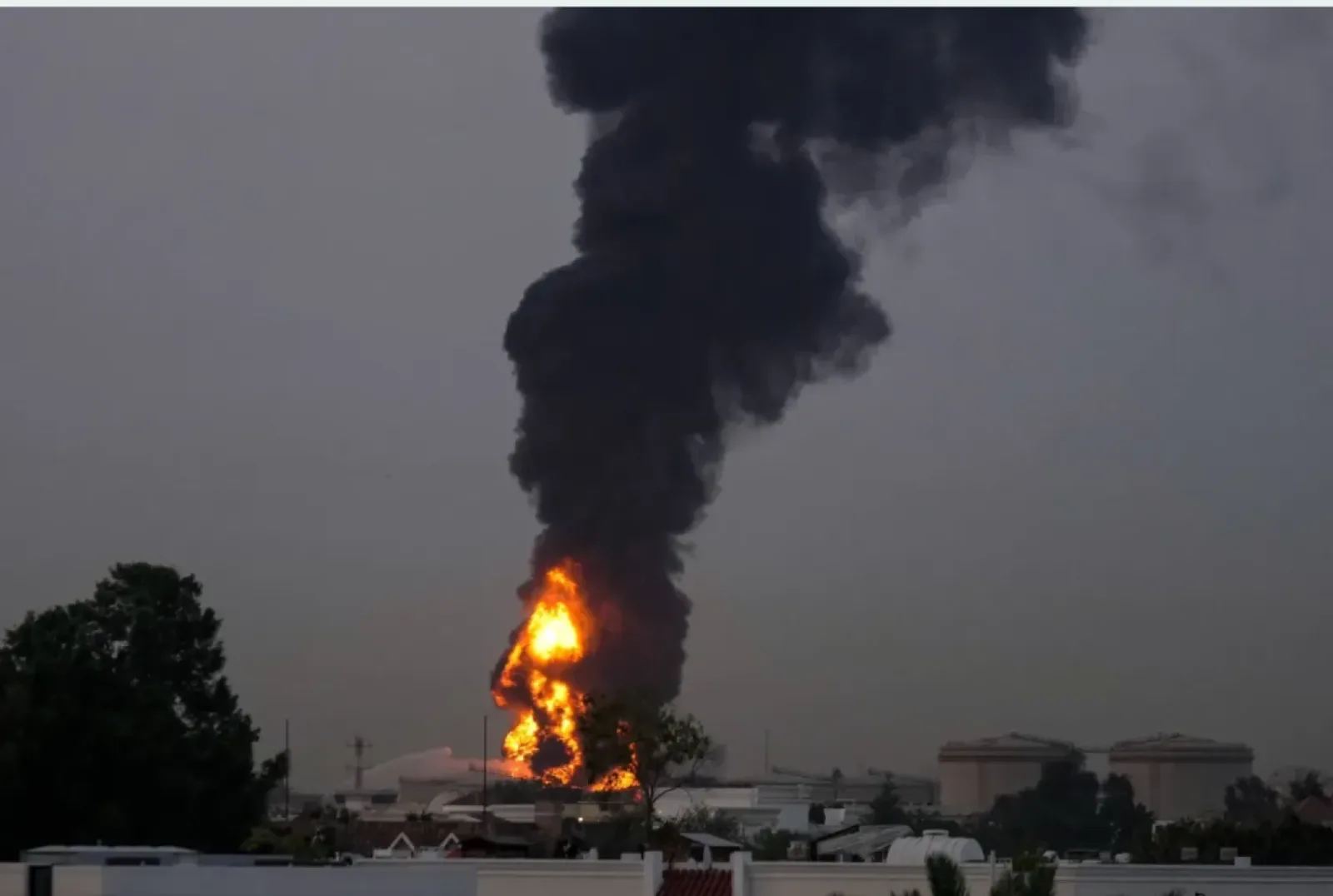
In the past 24 hours, Iran has fired a ballistic missile at Kuwait and launched a swarm of one‑way attack drones in and around the Strait of Hormuz, all of which were intercepted by Kuwaiti and U.S. forces, even as Washington carried out “defensive” strikes against Iranian drone infrastructure. The United States Central Command (CENTCOM) called the missile attack on Kuwait an “egregious ceasefire violation,” warning that Tehran’s actions threaten already fragile negotiations to end the war.
Timeline of the last 24 hours
According to CENTCOM, the latest escalation began late on May 27 U.S. Eastern Time, when Iran launched a ballistic missile toward Kuwait at about 10:17 p.m. ET, which Kuwaiti air defenses successfully intercepted before it could hit its target. Hours earlier, Iranian forces had also launched at least five one‑way attack drones that posed a “clear threat” in and near the Strait of Hormuz, all of which were shot down by U.S. forces.
In parallel, U.S. officials say American forces struck an Iranian ground control station in the southern port city of Bandar Abbas that was preparing to launch another drone, destroying the site before the aircraft could take off. Kuwait’s military then publicly confirmed it had come under a combined missile and drone attack, though it did not immediately reveal which facilities or locations were targeted on its territory.
Ballistic missile strike on Kuwait
CENTCOM’s formal statement said Iran fired a ballistic missile at Kuwait that was intercepted by Kuwaiti forces, framing the launch as a clear breach of the ceasefire that has been in place since early April. U.S. and Kuwaiti officials have not reported casualties or damage from the missile, indicating that air‑defence systems succeeded in stopping it before impact.
Kuwait later announced that it had faced both missile and drone attacks, but provided no public details on whether the incoming weapons were aimed at military bases, critical infrastructure, or urban areas. The country hosts key American facilities, including U.S. Army Central’s forward headquarters and several air and naval installations, and has repeatedly been hit by Iranian or Iran‑linked fire during the current conflict.
Drone attacks around the Strait of Hormuz
In the same 24‑hour period, U.S. officials say Iran launched at least five one‑way attack drones in and around the Strait of Hormuz, the narrow chokepoint through which roughly a fifth of global energy exports normally pass. American forces intercepted all of these drones before they reached their targets, and a sixth drone launch was prevented when U.S. strikes destroyed its control site on the Iranian coast.
The drones were described as posing a “clear threat” to shipping and regional forces, and U.S. reporting indicates at least some of them were directed toward a U.S. commercial vessel transiting near the strait. This comes on top of weeks of Iranian efforts to enforce a de facto blockade, including threats to fire on vessels that do not obtain permission from the Islamic Revolutionary Guard Corps (IRGC) to cross the waterway.
US “defensive” strikes inside Iran
In response to the latest drone activity, U.S. forces carried out what officials called “defensive strikes” on Iranian territory, targeting a ground control station near Bandar Abbas that was preparing to launch another one‑way attack drone. U.S. officials told reporters that four Iranian drones threatening the Strait of Hormuz were shot down and a fifth was neutralised on the ground when the control site was struck.
American officials have stressed that these operations are intended to maintain the ceasefire, not to restart a full‑scale air campaign, arguing that the actions were “measured, purely defensive” and focused on immediate threats to shipping and regional bases. However, Iran’s Revolutionary Guard claimed it retaliated by striking a U.S. air base in an unspecified Gulf country, without providing clear evidence publicly, keeping information foggy about the precise scope of reciprocal attacks.
Ceasefire under strain
CENTCOM characterised the missile strike on Kuwait as an “egregious ceasefire violation,” noting that it came just hours after the drone launches near the Strait of Hormuz, and warning that Iran’s moves undermine efforts to negotiate a longer‑term peace deal. Kuwait’s account supports that picture, with its military announcing it had been hit by missiles and drones even as diplomatic channels were trying to stabilise the front.
The United States and Iran have traded limited strikes throughout the week while still talking about a political settlement, creating a situation where shooting has not “fully ceased” despite formal truce language. U.S. President Donald Trump has publicly accused Tehran of trying to “outwait” Washington in the negotiations, insisting that American forces will keep defending shipping and regional bases from any new attacks.
Regional and Gulf reaction
Gulf capitals reacted with concern, with regional media reporting that states such as Saudi Arabia, Qatar, Bahrain, Jordan and the UAE condemned the missile attack on Kuwait and warned that it risked dragging the region back into broader war. Commentators have noted that Kuwait is a close American ally and a logistical hub for U.S. operations, so any sustained campaign against it would be seen as a direct challenge to Washington.
The incident also fuels anxiety in nearby states that have already been hit by Iranian missiles and drones earlier in the war, including the UAE and Saudi Arabia. For them, the latest attack reinforces the message that as long as Iran and the United States confront each other across the Gulf, no country hosting U.S. forces or key energy infrastructure is fully shielded from spillover.
Threat to global shipping and energy
The timing and location of the attacks underscore Tehran’s continuing strategy of using the Strait of Hormuz as leverage. By launching drones in and near the strait and firing on a U.S. ally that sits along Gulf shipping lanes, Iran is reminding the world it can still threaten the flow of oil and gas even during a ceasefire.
U.S. officials have responded with “Project Freedom,” a plan to guide stranded commercial vessels through the strait and to prevent Iran from controlling passage, while at the same time trying to keep escalation limited. As of the latest updates, over a hundred Iranian‑flagged ships have reportedly been turned around or redirected at the blockade, and the U.S. insists that ultimately “no nation will control” the waterway once a final settlement is reached.
What we still do not know
Despite the flurry of statements, several details from the last 24 hours remain unclear. Kuwait has not disclosed exactly which locations were targeted by the intercepted missile and drones, and neither Kuwait nor the United States have reported confirmed casualties linked to this specific wave of strikes.
Tehran, for its part, has admitted to an attack “in the region” after the U.S. strike near Bandar Abbas and claimed it hit a U.S. air base, but has not specified which country hosted the facility or presented independent evidence of damage. This information gap, combined with the competing narratives from Washington and Tehran, makes it difficult to assess the full tactical impact of the latest exchange—though the strategic message on both sides is unmistakable.